Jugend forscht 2026
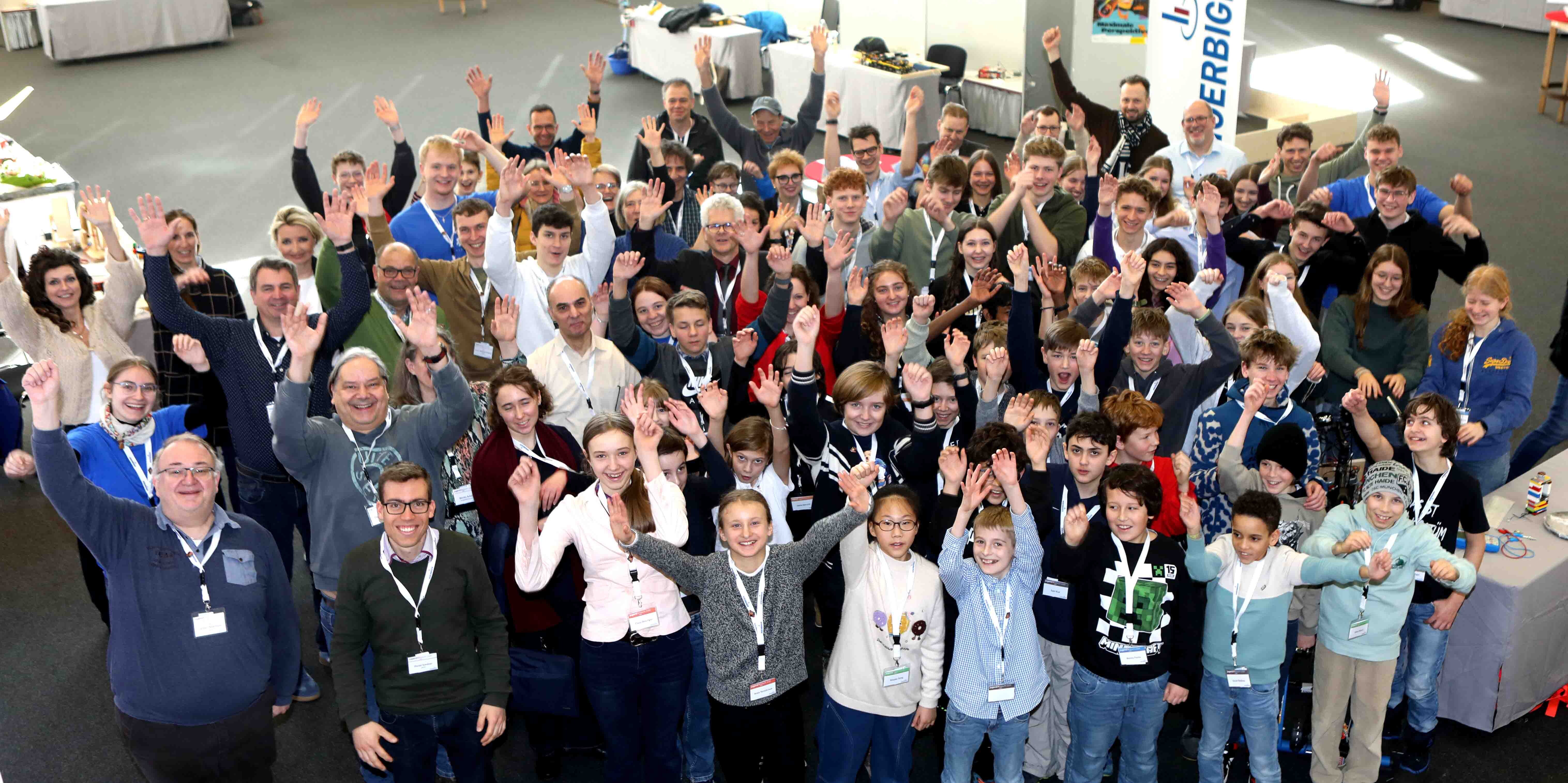
Winners Announced in the Foothills of the Alps
35 projects, 54 young talents and numerous innovative ideas: The regional competitions of Jugend forscht and Jugend forscht junior in the foothills of the Alps once again demonstrated the remarkable potential of young scientists in 2026. Four projects were selected as regional winners by the jury, in addition to 27 special prizes. For 22 years, HOERBIGER has supported the competitions as patron and sponsor.
After months of intensive research, experimentation and development, participants presented their projects to the public on February 25 and 26. Jugend forscht is Germany’s most renowned competition for young researchers in science and technology.
“This year’s motto, ‘Maximum Perspective,’ could not be more fitting,” said Dr. Ansgar Damm, long-time Head of Research & Development at the HOERBIGER Automotive Division, who retired at the turn of the year. “The range and quality of the projects – from sustainable energy solutions to robotics and autonomous systems – are truly impressive. You are sending strong signals for the future.”
“At HOERBIGER, we know that we need people like you – curious, dedicated and ready to explore new paths. Our technologies have always thrived on innovation and bold ideas. That is why our commitment to Jugend forscht goes far beyond sponsorship: it is an investment in the bright minds who will drive our country and our industry forward.”
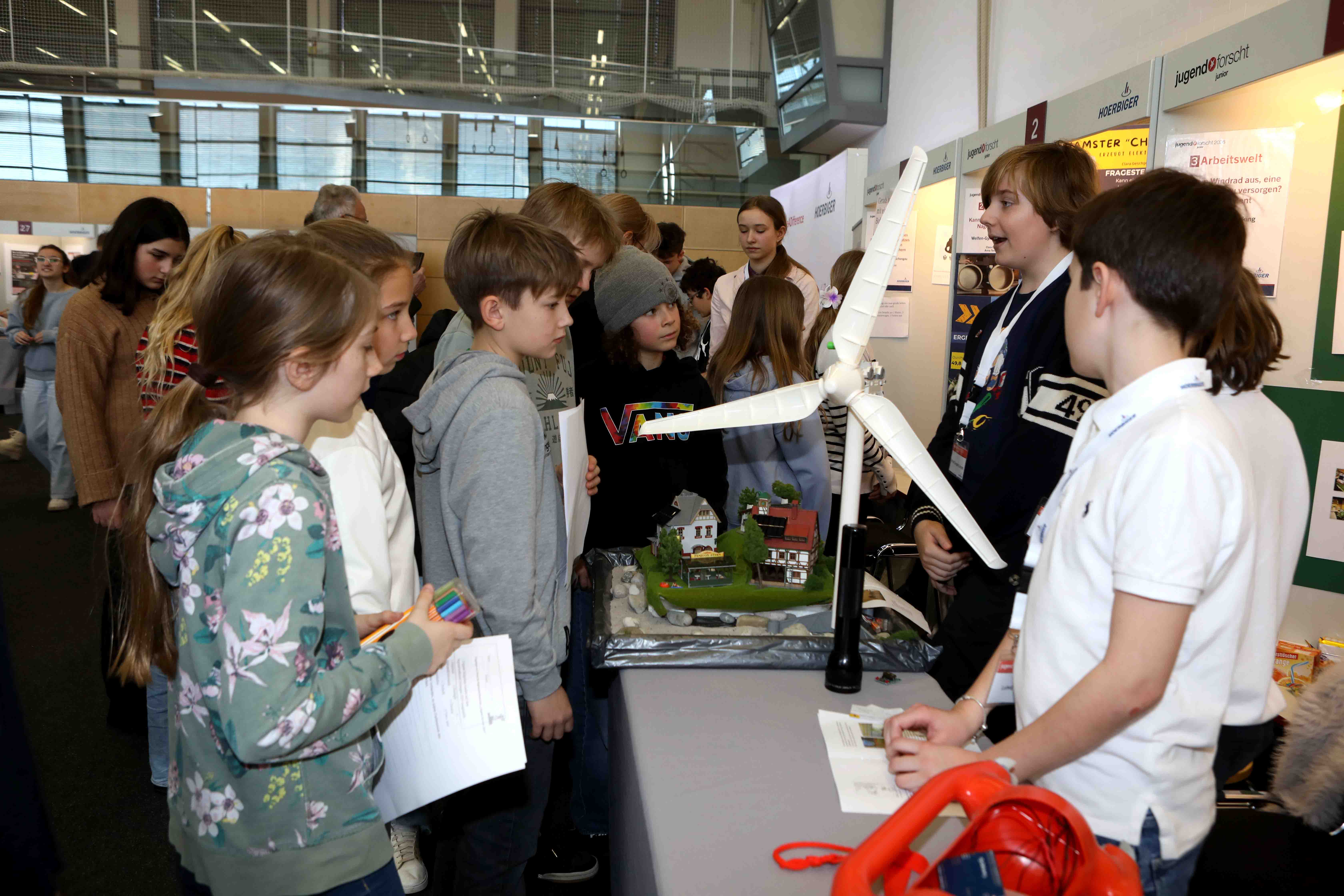
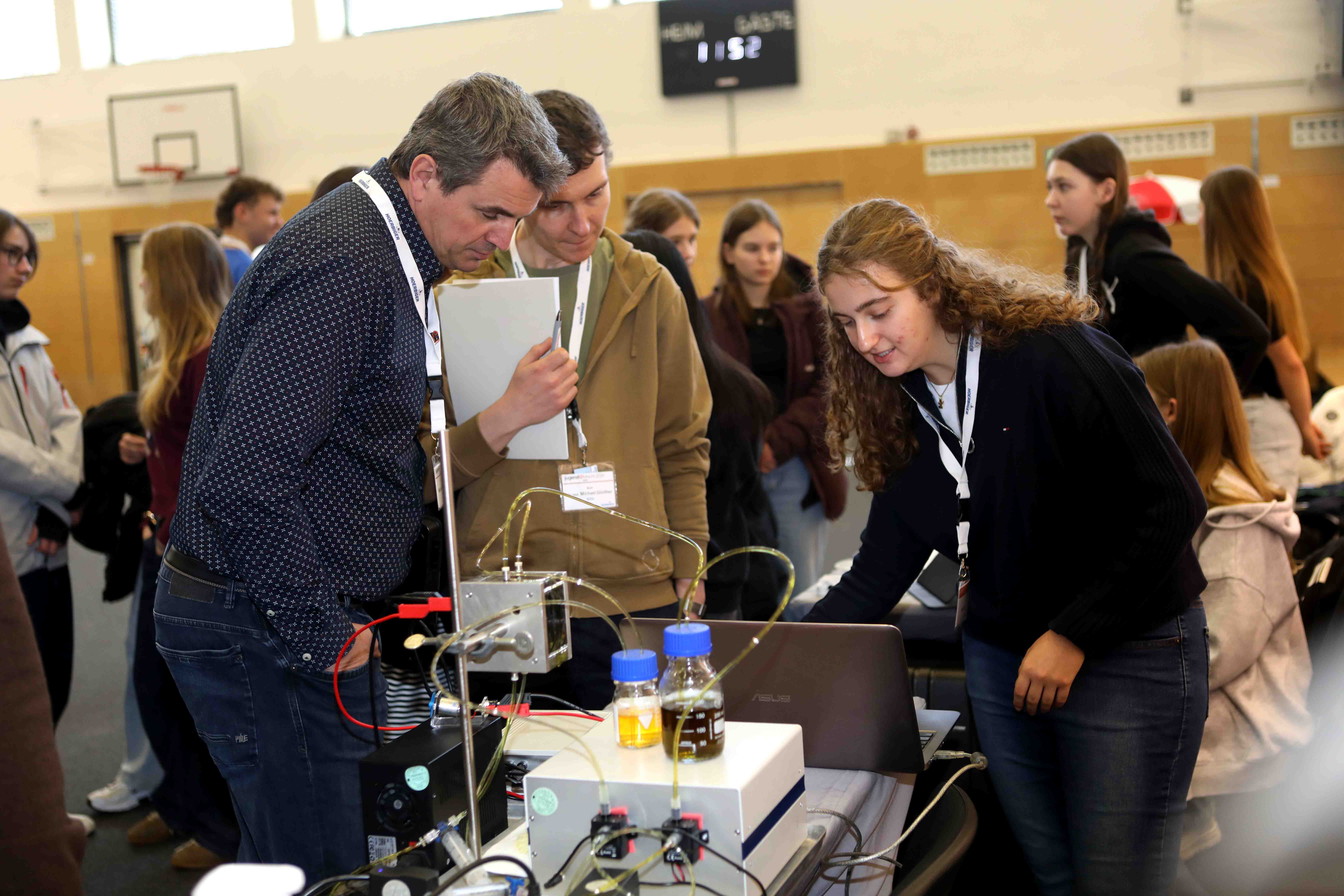
Three winning projects in the Jugend forscht category
In the field of Working World, Keano Venner (18) from Werdenfels-Gymnasium Garmisch-Partenkirchen impressed the jury with his project “HEMx.” Drawing on his experience in emergency medical services, he developed an autonomous blood collection device capable of independently detecting veins and safely placing intravenous lines. The aim is to reduce failed attempts, pain and complications, making blood draws easier and more patient-friendly for both medical staff and patients.
In the field of Chemistry, the regional prize went to Julia Trapp (18) from Ernst-Reisinger-Gymnasium in Landheim Schondorf. In her project “From Vitamin B3 to an Organic Battery,” she developed a nature-inspired energy storage system. She synthesized and modified a molecule similar to the naturally occurring NAD+ in order to increase its energy storage capacity. Her work aims to create a sustainable alternative to conventional metal-based batteries.
In the field of Biology, Sophia Clement (15) from St.-Irmengard-Gymnasium Garmisch-Partenkirchen of the Archdiocese of Munich and Freising won with her project “The Aria of the Predator.” In her bioacoustic study, she applied Fourier transforms and spectrogram analysis to examine the calls of predators and prey, identifying characteristic differences in frequency, temporal structure and harmonic complexity. Her work combines physical analysis with biological research questions.
One winning project in the Jugend forscht Junior competition
In the Jugend forscht junior category, Hannes van Marwick (12) and Jonathan Siebers (11), both from Werdenfels-Gymnasium Garmisch-Partenkirchen, won with their Lego paper airplane folding machine. Using Lego Mindstorms, they designed a fully automated production line that folds paper airplanes and subsequently tests their flight performance. In the process, they evaluated both the precision of the folding mechanism and the resulting flight characteristics.
All regional winners qualify for the Bavarian state competitions: Jugend forscht will take place in Munich from April 13 to 15, and Jugend forscht junior in Regensburg from April 17 to 18.
“Every year, the projects once again demonstrate the depth of expertise and creativity with which young people approach complex challenges,” said Dr. Stefan Felber, Head of the Regional Competitions in the foothills of the Alps. “This competition provides them with a valuable platform to showcase their ideas.”
About Jugend forscht
For more than six decades, "Jugend forscht" has been supporting the promotion of young people with scientific talent. The initiative is backed by the federal government, the magazine "stern", the economy and schools in Germany. The competition is sponsored by the non-profit association Stiftung Jugend forscht e.V., patron is the Federal President. There are two age divisions in the competition: Pupils up to the age of 14 compete in the junior section "Jugend forscht junior", participants up to 21 years of age in the category "Jugend forscht".